
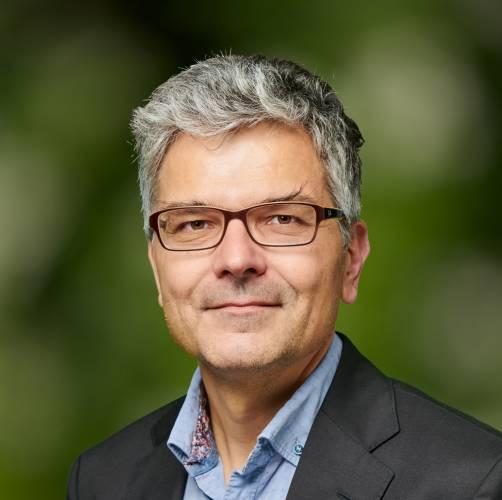
Thomas Häusler, Senior Manager International Projects
Dear reader,
Almost every day, we learn something new from working with you, with colleagues from other WWF offices, with employees of local partners in the field, and from residents in the project areas. What we learn feeds into discussions and new approaches, is put into practice and tested. Some things work brilliantly, while others are less successful.
This new newsletter reports on our learning journey. Every three months, we will take you with us to explore what WWF Switzerland and its partner organisations are developing. Sometimes these will be comprehensive new concepts, sometimes small changes that nevertheless have the potential to make a big impact or that we are simply proud of.
We are delighted that you are joining us on the first stage of this journey and hope that you enjoy this first issue and stay with us – and even recommend the newsletter to others. And of course: take us at our word when we say "learning", and let us know what you would do differently, what you would like to read next, and of course, what you liked. This call to action will be included in every issue. Promise!
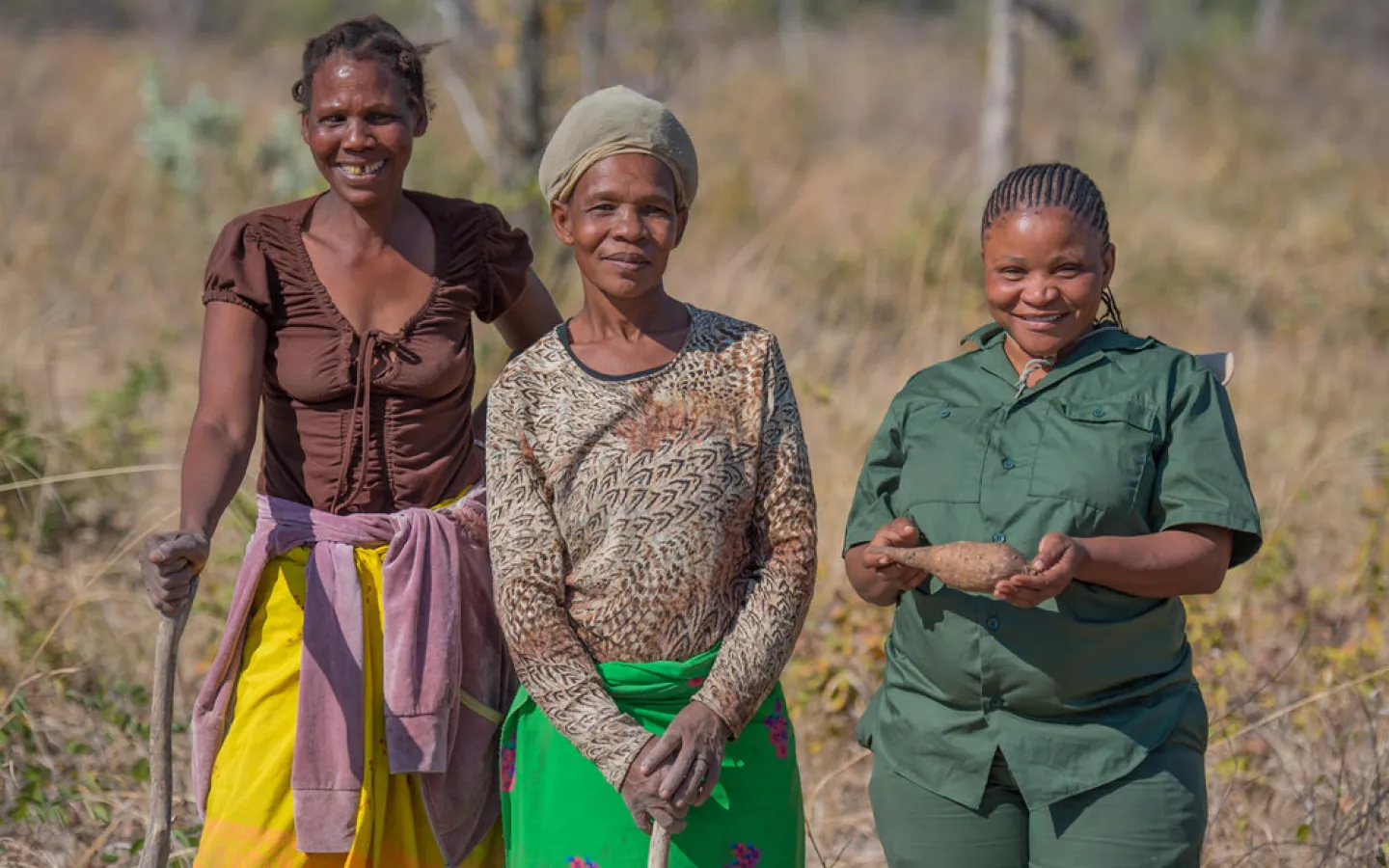
WWF's new approach increases local conservation funds five times
Money means self-determination. That is why WWF Switzerland supports WWF offices in the Global South in tapping into new sources of funding on their own. With great success: every Swiss franc invested has generated five francs in new funds, which the offices can invest in projects and their own development. Just as they see fit.
By Bella Roscher, Senior Manager International Projects and lead of the ODIG programme
The resource mobilization team in WWF Adria grew their corporate partnerships from three to nine, generating over 400’000 Euros. WWF Namibia turned 200’000 Swiss francs into over 2 million and built stronger civil society partnerships for natural resources management. WWF fundraisers in Colombia multiplied 654’000 Swiss francs into 3 million for nature conservation. How? These teams received financial and technical support from the WWF Switzerland ODIG programme.
«Imagine you were a business wanting to grow, you’d get a loan or issue equity. We are an NGO and can’t do this. There is a danger we would grow our conservation impact slowly because we can’t access capital markets. This is why I love ODIG. ODIG is our way of accessing capital to speed up our growth. And – we dearly need to speed it up!»
Turning One into Five
ODIG? Yes, ODIG: Organisational Development for Income Generation: a new, bold approach to resource mobilisation. And an ambitious programme supporting WWF offices in low- and middle-income countries raise five times the money invested by the Global Network Development Department (GND) of WWF Switzerland. It all began with WWF Switzerland's decision to invest in this approach and the shared desire to try out new things and learn together with the participating WWF offices.
Enabling Eight Offices Build Stronger Resource Mobilisation Teams
Since its launch in 2020, the ODIG programme has proven it is possible to generate conservation impact by making five million francs with one million invested. Over the period between 2020 and 2025, ODIG supported eight WWF offices in low- and middle-income markets: Adria, Caucasus, Chile, Colombia, Kenya, Namibia, Philippines and Vietnam, and two regions: Asia Pacific 30 and Latin America Caribbean. Through ODIG, these teams have access to:
- 200+ hours of one-on-one coaching each year, on topics such as: corporate engagement, philanthropic giving, individual and digital fundraising, innovation and recruitment
- Monthly speed cafés: spaces where supported teams share challenges, best practices and build stronger connections
- Bi-annual bootcamps: learning experiences on specific topics such as innovative fundraising, future-proofing fundraising, cost recovery, and donor acquisition and retention.
In the words of Ajay Barai, WWF Regional Director, Europe and North Africa, sharing skills is contributing to quicker development of new fundraising programmes: «ODIG is a great opportunity to help offices grow and become more financially sustainable. It is grounded in deep expertise of what works and what doesn't from more developed markets. This can be applied in newer markets where we have opportunities to grow our fundraising and supporter base more quickly and with greater returns on investment than from investing in saturated markets.»
ODIG is Helping the WWF Global Network Build a More Resilient and Up-to-date Organization
Historically, over 80 percent of all of WWF’s income worldwide comes from North America and Europe. WWF offices in other countries are dependent on this income to deliver conservation on the ground. ODIG exists to shift this dynamic, enabling these offices to further develop local fundraising capacity and generate more unrestricted income over time to build more resilient offices on location, delivering conservation impact faster.
«There’s a strong pull of the status quo in the WWF Network. Fundraisers in the north, implementers in the south. Whenever you start changing perceived roles, that can be discomforting for a certain amount of time. I can understand some people feel rattled in their comfort zone. But I just think we can’t afford to remain in that comfort zone. ODIG is helping us build a more resilient and more up-to-date organisation,» says Thomas Vellacott.
A strong, independent civil society is essential for halting environmental destruction, promoting social justice, and ensuring sustainable development in the long term. So, how is the ODIG programme catalysing change in that regard? It helps WWF offices, and hence also their civil society partners, in low- and middle-income countries, to become more resilient, more resourceful, and more result-oriented. They increasingly generate their own (unrestricted) funds so they, and civil society as a whole, can improve livelihoods and achieve greater conservation impact.
A Corporate Partnership for Sustainable Seafood in Croatia
A great example of conservation impact made possible thanks to ODIG comes from Croatia. The WWF Adria team expanded their corporate engagement work with financial support from the ODIG programme. ODIG enabled WWF Adria to hire corporate engagement staff and build their skills. This resulted in WWF Adria tripling their partnerships from three to nine. One partnership with Valamar, a hospitality brand from Croatia, began in 2022 and has generated concrete conservation impact.
Valamar is supporting the local Komiža Fishhermen’s Cooperative. Fishing on the Croatian island of Vis is not just a job; it is a way of life that goes back centuries. The Komiža Fishermen’s Cooperative, one of the oldest in the region, is at the heart of this tradition. Using small boats and eco-friendly methods, they are committed to protecting fish stocks and the beautifully diverse seabed of the Adriatic Sea.
In 2022, Valamar began their journey with WWF Adria to enhance sustainable practices behind their marine products. An action plan is in place to increase the share of sustainable seafood in their hotels, resorts, and camp sites by 2026. Valamar has committed to removing all endangered fish and seafood species from its hotel menus.
The good news? The delicious hake from Komiža is already a hit on their à la carte and buffet menus at Valamar’s celebrated restaurants.
«ODIG differs from traditional nature conservation funding in that the programme provides funds for organisational development. These are funds that we can use for our own organisation and our partners. This has an enormous impact.»
Aiming to Fund at least 25 Fundraisers and Trigger 50 million Swiss Francs in the Next Three Years
We have learned that fundraising in the low- and middle-income countries is fully possible and often generates a higher return on investment than in the more mature markets. For the upcoming three years, the ODIG team therefore intends to further speed up its impact by supporting at least 25 resource mobilisation positions and help trigger at least 50 million Swiss francs for locally led conservation impact.
To achieve this, the team will keep what works: such as 1-on-1 coaching and joint sessions for sharing best practices. New initiatives such as cohort-based skill development and individual learning journeys will be introduced to further scale the ODIG programme.
Bella Roscher, lead of the ODIG programme, comments: «Thanks to ODIG, WWF now has five times more money than we invested in this programme. I thrive on enabling our crew to grow who they are, develop what they know, and boost fundraising across WWF offices in low- and middle-income countries through peer exchange and skill sharing.» She adds: «Together, we can change the status quo and shift away from a funding structure where 80 percent of funds come from the Global North.»
Questions or suggestions about ODIG?
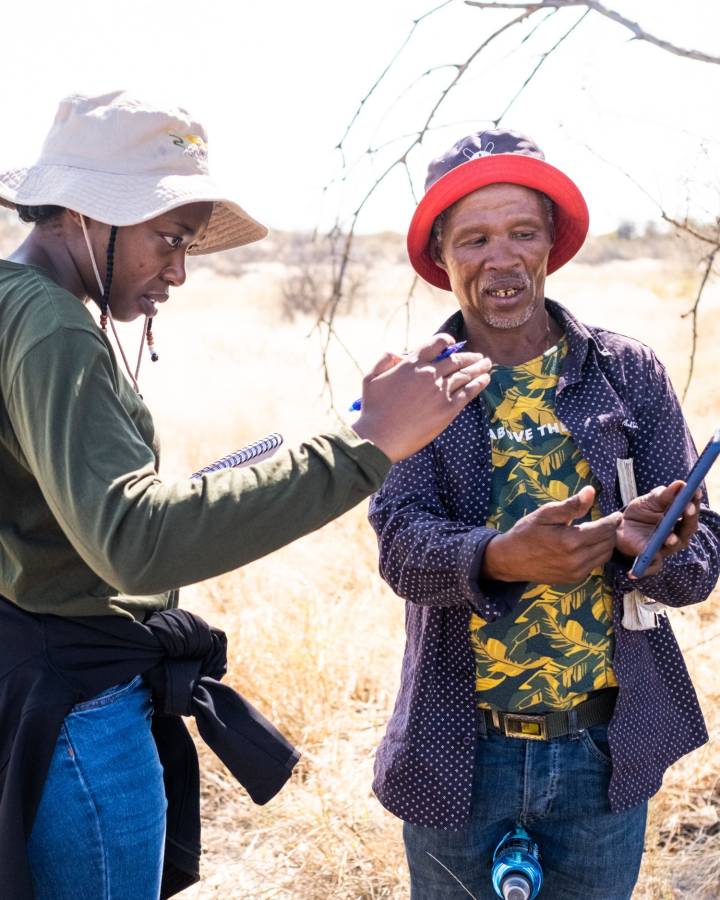
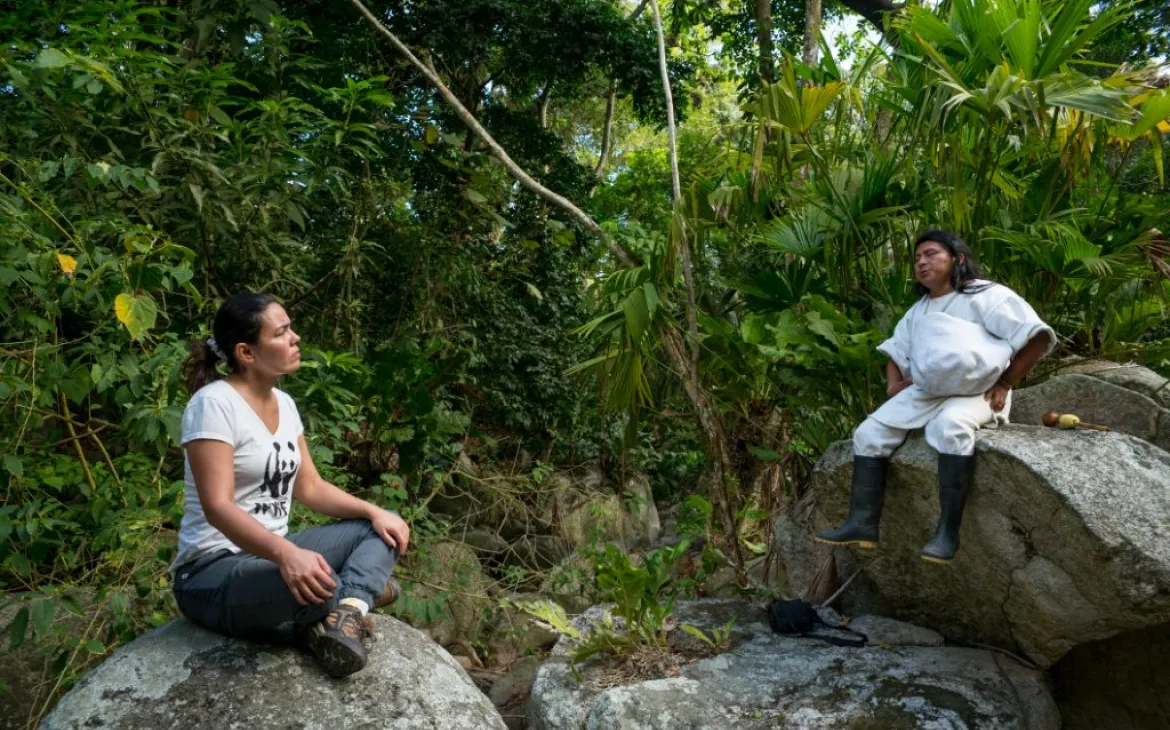
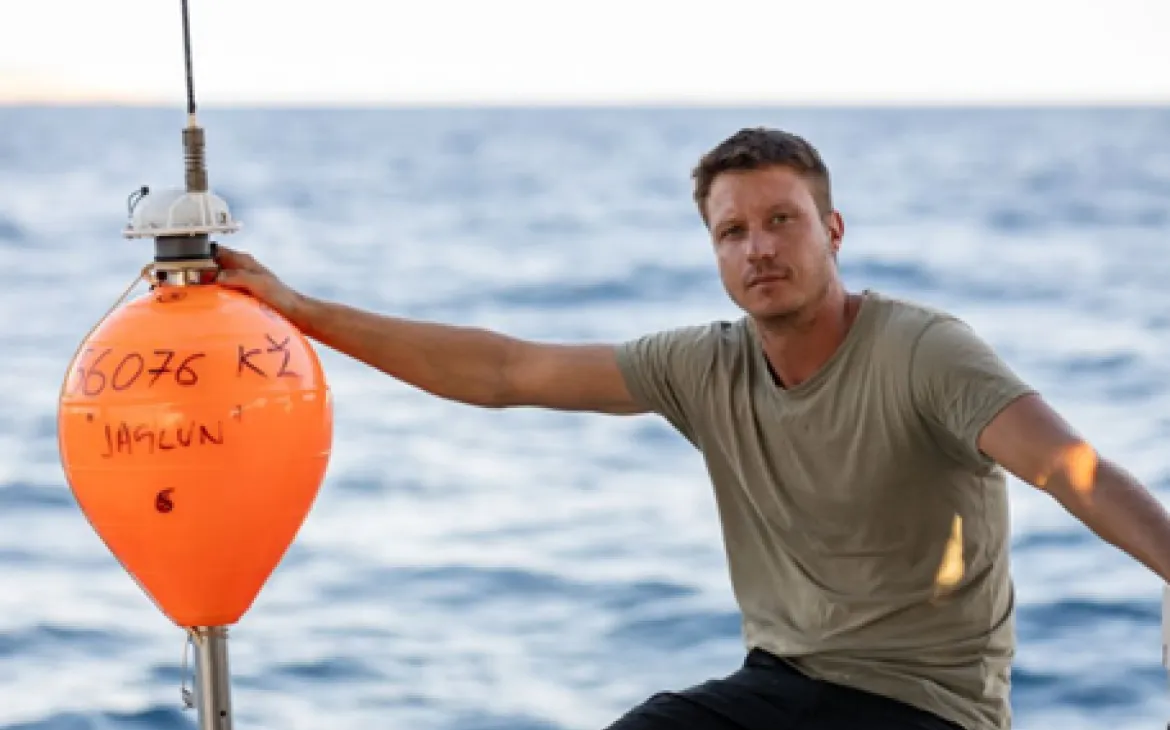
ODIG enables self-determined projects. In Namibia, in Colombia, in Croatia.
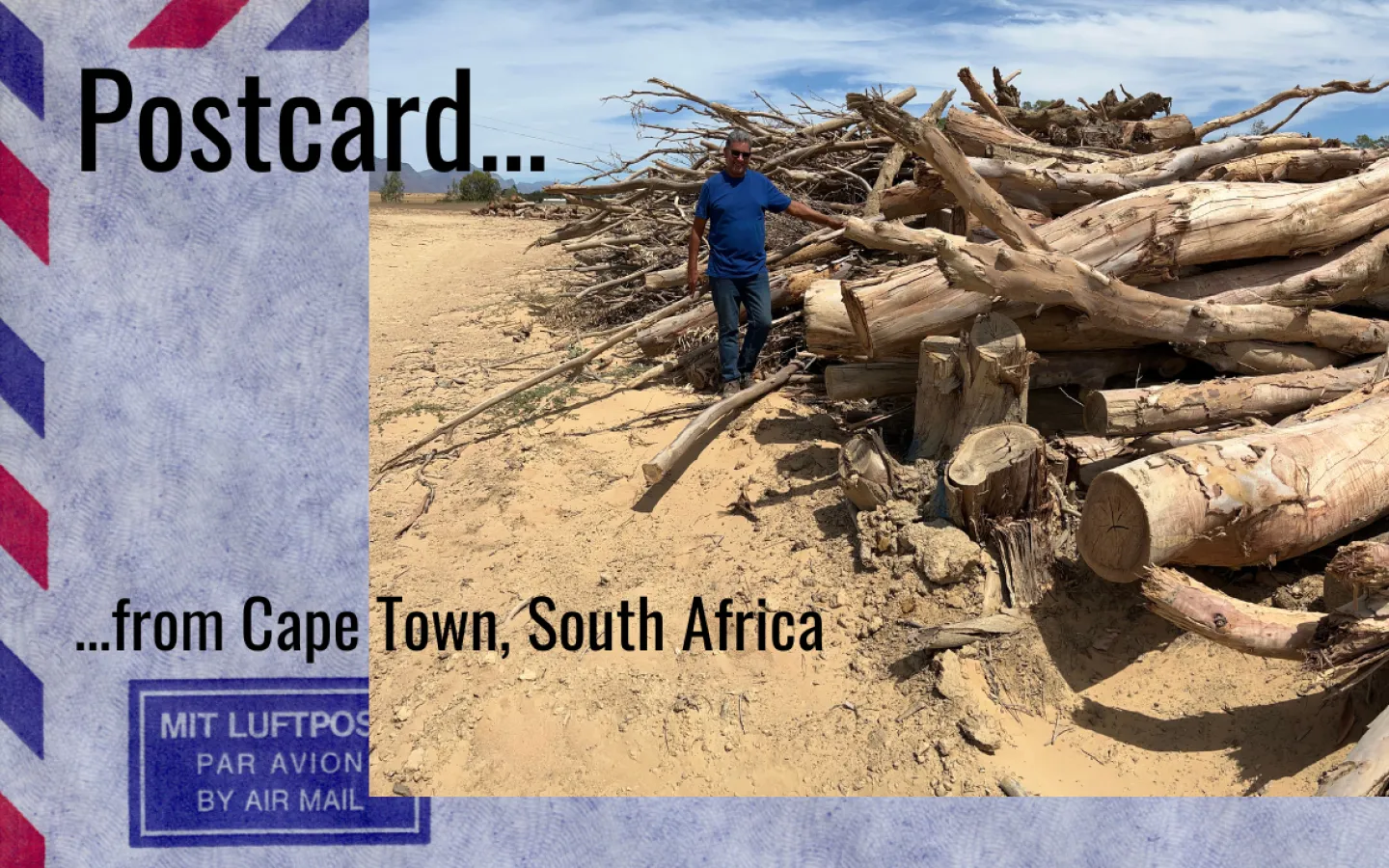
Stanley Engel has alien invasive trees felled to save water.
Working together for more water
Stanley Engel is proud of the trees that have been cut down. This may come as a surprise, because normally everyone wants to protect the forest. But these trees are alien species here in the greater Cape Town area. They displace the native ecosystem, the species-rich fynbos, and they consume a lot of water.
Water is scarce in the Cape region, which is famous for its wines and fruit. In 2018, after a three-year drought, disaster almost struck when there was no longer enough water, neither for intensive irrigation nor for the people of Cape Town. WWF South Africa is working with authorities, environmental organisations and farmers' associations to reduce water stress. Together, they are testing approaches in this open-air laboratory to distribute water fairly, reduce consumption and make people and nature more resilient. The solutions developed here could be adapted in other regions of South Africa and worldwide.
The work of WWF South Africa shows how much can be achieved by working with key partners in the same area over many years. WWF calls this approach the «landscape approach», which we have successfully implemented from South America to Africa and Southeast Asia. It greatly increases the likelihood that the results of individual projects will not remain isolated and short-term successes but will instead become lasting building blocks of a larger whole.
Stanley Engel is the catchment coordinator for the Berg River Water Users' Association. The Berg River flows east of Cape Town. Engel works with local farmers to manage the river's catchment area, identifying where invasive trees need to be cleared. Where does a watercourse need to be cleaned? Who gets how much water? Actually, much of this is regulated by law and everyone benefits from much of the work. But it still wouldn't work without Stanley Engel, because otherwise people tend to focus only on their own work and their costs rather than on the benefits for everyone.
The role of catchment coordinator was invented by WWF South Africa staff because they realised that water user associations were not functioning optimally. «In the past, the Ministry of Agriculture was unable to persuade farmers to do the necessary work," says Engel. «It lacked credibility.» Since Engel started going from farm to farm in jeans and boots, talking to farmers and checking things out for himself, the farmers have been willing to do their share of the work or provide funding. «Now farmers even come to me and want to start clearing along their stretch of river if this has not yet been planned by the ministry.»
Studies have shown that clearing invasive alien trees is the cheapest way to obtain urgently needed water for people and nature. However, the government and landowners lack the money to clear enough trees. Some areas are two-thirds overgrown. Stanley Engel can help here too. His job is also to raise additional funds from the state or other sources so that more can be cleared than the budget would allow. This means that for every rand that donors give to the WWF South Africa project, more hectares can be cleared of invasive alien trees because Stanley Engel and his team mobilise additional funds for the project.
The effect is noticeable and visible. Melissa van Niekerk from the Boschendal Winery reports that the water reservoirs have remained full for longer since invasive alien trees were removed from the farm's land. Neighbours are now also interested in this approach.
Nature is also benefiting: in the Kogelberg Biosphere Reserve, 157 native plant species were identified in an area shortly after it was cleared. Although this is only a fraction of the 9,000 species of the enormously species-rich fynbos, it is a start.
Recorded by Thomas Häusler, responsible for the project in South Africa at WWF Switzerland
Melissa van Niekerk from Boschendal Winery reports on the positive effects of clearing invasive trees.
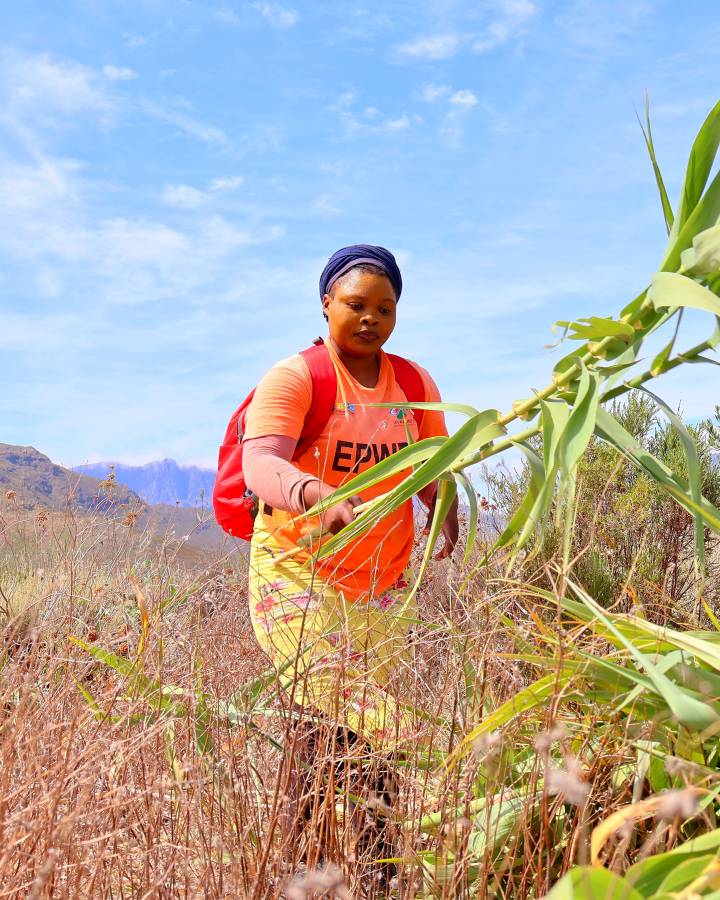
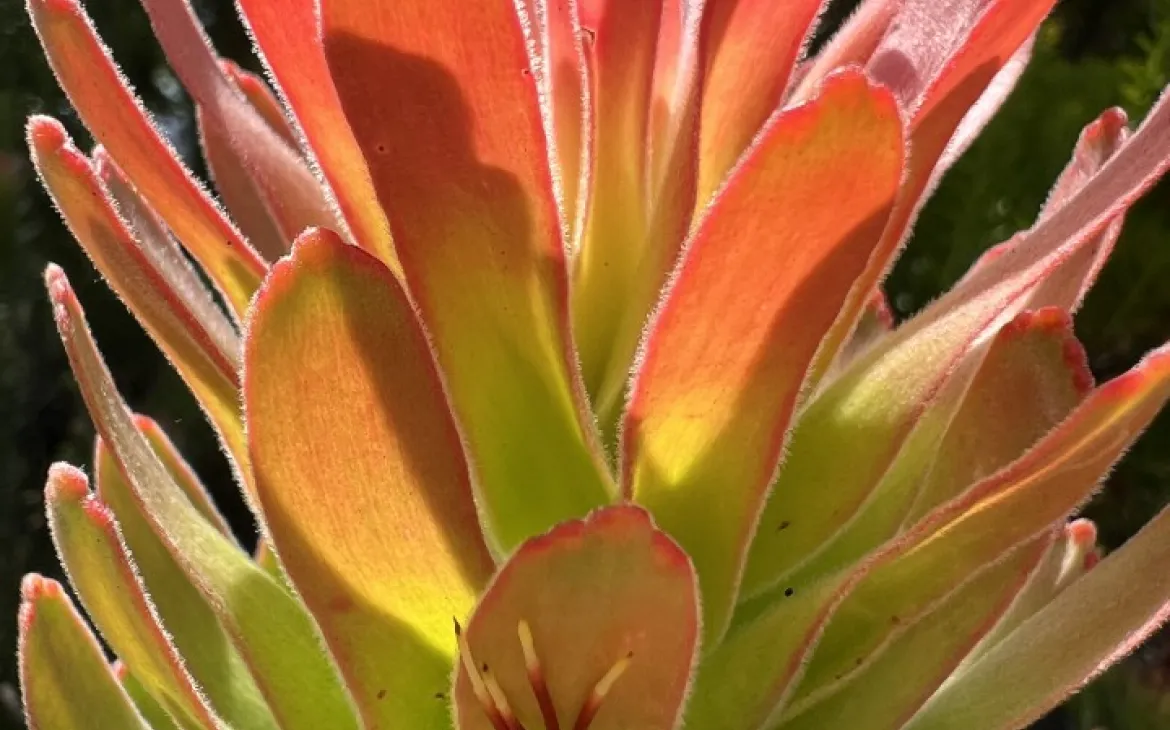
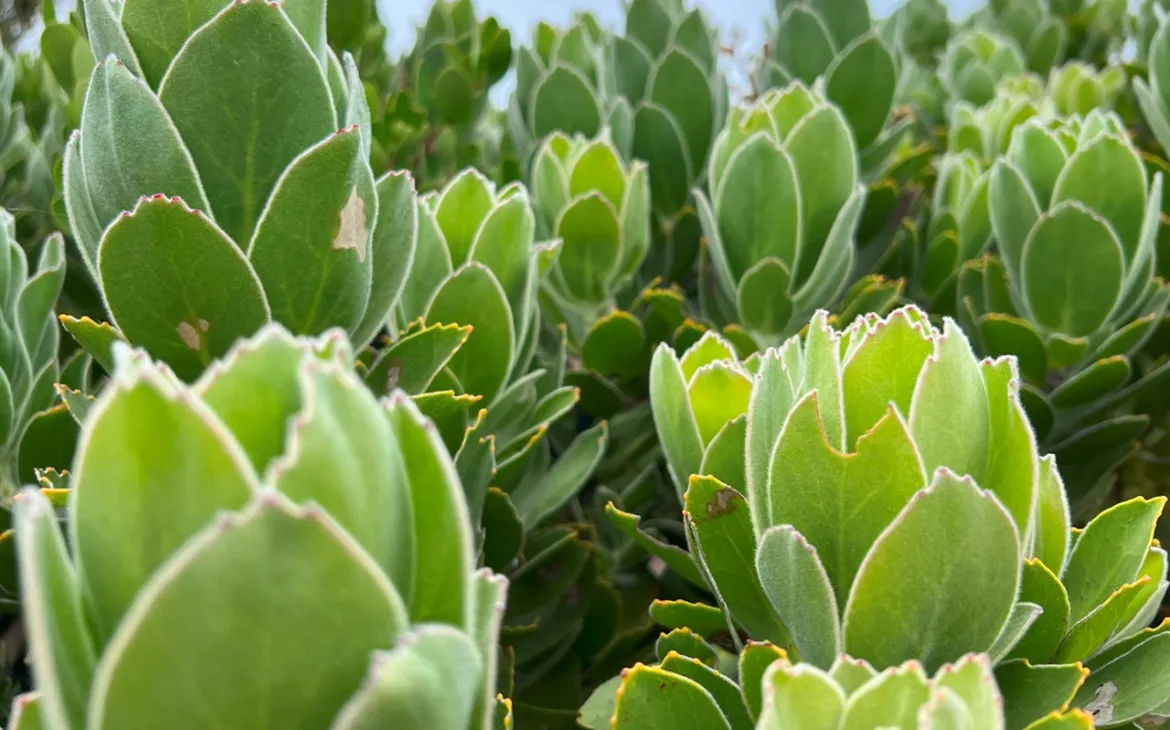
Clearing work. Fynbos plants
Das internationale Programm des WWF Schweiz wird von der Direktion für Entwicklung und Zusammenarbeit DEZA, Eidgenössisches Departement für auswärtige Angelegenheiten EDA, mit einem Kernbeitrag unterstützt.
Have your say
How do you like our newsletter?
What would you like to see changed?
What would you like to read or discuss?
Send an mail to the editor of the newsletter
Imprint: Global Network Development (GND), WWF Switzerland
Editor: Thomas Häusler
