Partnership with Lidl Stiftung & Co.KG 2024
In 2024, WWF and Lidl Stiftung & Co.KG launched a five-year Sustainable Business Partnership active in 31 countries. The partnership focuses on collaborating along Lidl’s value chain to address the global ecological challenges of our time, including climate change and loss of biodiversity, ensuring that more households have access to sustainable choices. Key elements of the partnership are to reduce Lidl’s footprint, to increase Lidl Stiftung & Co.KG's sustainable handprint and engage for staying within our planetary boundaries.
Related Topics:
Lidl International
Climate
In the year 2020, Lidl committed to reducing its emissions in accordance with the scientifically based climate targets of the Science Based Targets Initiative (SBTi). This commitment was made under the umbrella of the Schwarz Group commitment, which Lidl is part of.
Lidl sets climate goals according to SBTi as part of the companies of the Schwarz Group
As part of its partnership with WWF, Lidl had its 1.5° targets revalidated by SBTi in the financial year 2024. In the same year, three years earlier than agreed upon, Lidl committed to setting a net-zero target according to the SBTi. The validation of the long-term targets is currently pending. With this they lay the foundation for their long-term transition and for strategic decisions aligned with a net-zero pathway, including all emissions along the value chain.
Lidl develops an impact-oriented climate and nature financing plan
As part of the partnership, Lidl and WWF work together to develop and pilot a concept for climate and nature-based financing based on Lidl’s remaining emissions. The financing approach aims to maximize benefits for people, climate and nature, e.g. by supporting holistic landscape projects.
Water
Lidl is currently developing the foundations for setting science-based targets for water.
Lidl identifies freshwater hotspots and risks, and subsequently implements a responsible water strategy
With the support of WWF, Lidl is reviewing its existing analysis and targets on freshwater risks. Improved targets and indicators will be set and a comprehensive strategy for the responsible use of water will be developed. In this way, water risks along the company's own value chain can be identified and addressed. This is particularly important for high-risk products, for example to avoid water contamination or water scarcity and their implications on biodiversity. Concrete implementation plans in relevant areas, such as freshwater ecosystems, that involve relevant stakeholders and define collective action will be developed, which serve to support the long-term resilience of sensitive areas, which are particularly important.
Biodiversity
Lidl is currently developing the foundations for setting science-based targets in the area of biodiversity.
Lidl identifies biodiversity hotspots and associated risks, and subsequently implements a responsible biodiversity strategy
With the support of WWF, Lidl assessed and identified its biodiversity risks in the year of 2024. As next steps Lidl will set contextual targets for its highest risk commodities and develop metrics and a comprehensive strategy for the protection of biodiversity accordingly. In this way, biodiversity risks such as deforestation or species extinction can be identified and addressed along Lidl’s own value chains. The focus is set on pinpointing particularly high-risk value chains and regions and finding ways to increase their resilience. For these areas, specific implementation plans that involve relevant stakeholders and define collective action will be developed.
Advocacy for biodiversity
While Lidl has and continues to advocate for positive progress in the field of biodiversity as part of the partnership with the WWF, the main focus going forward remains the finalisation of the comprehensive biodiversity strategy, which will drive Lidl's advocacy work in this field.
Raw materials
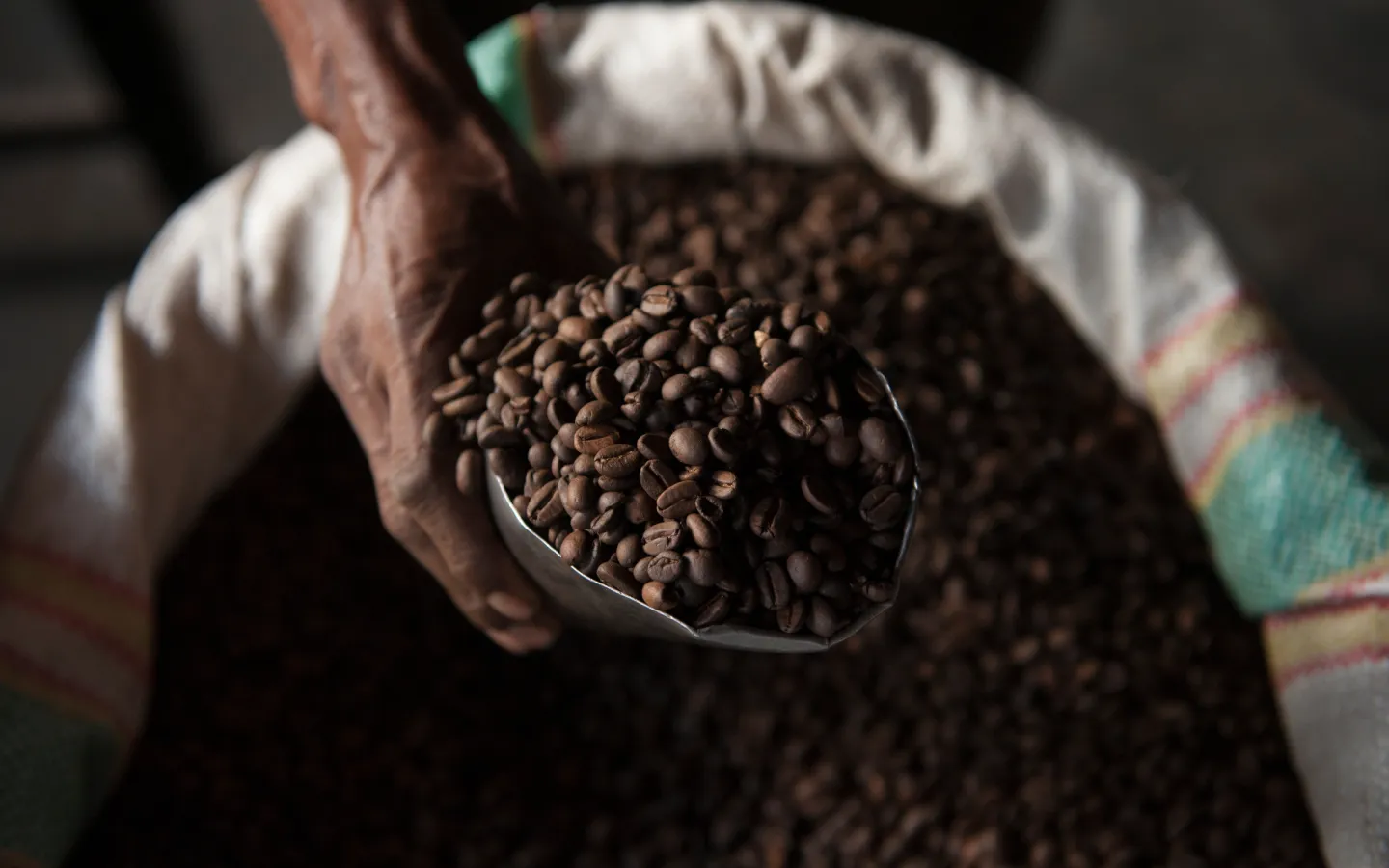
Lidl is committed to ensuring the responsible procurement of critical raw materials and to establish and expand traceable, deforestation- and conversion-free supply chains.
Deforestation- and conversion-free raw material procurement
Lidl is committed to only sourcing high-risk raw materials—such as soy, palm oil, cocoa, coffee, beef, wood, pulp, and paper—from deforestation- and conversion-free supply chains. To ensure this, Lidl will develop a raw material strategy to avoid deforestation and conversion for its own-brand products that is in line with the Accountability Framework Initiative (AFi) and the EU Deforestation Regulation (EUDR). The scope of application is all own-brand products (standard and promotional range) in all Lidl countries.
Compliance with deforestation- and conversion-free cut-off dates
Lidl ensures that both, them as well as their suppliers adhere to the cut-off dates for deforestation- and conversion-free set by the AFi and the EU Deforestation Regulation. This applies to the high-risk raw materials soy, palm oil, cocoa, coffee, beef, wood, pulp and paper. The scope of application is all own-brand products (standard and promotional range) in all Lidl countries.
Traceability and supplier engagement
Existing and new suppliers will be required to adhere to policies without deforestation, conversion and exploitation and to ensure traceability at least up to the factory level (and in the case of high risk up to the plantation).
Lidl aims to have 100% of its current and future suppliers committed to maintaining deforestation- and conversion-free supply chains by the end of the 2026 fiscal year. Additionally, traceability of raw materials and products must be guaranteed up to the factory level, and for high-risk cases, traceability should extend all the way back to farm level. The percentage of supplier contracts that contain commitments to deforestation- and conversion-free supply chains and traceability is measured. This concerns the suppliers of Lidl's own brands (standard and promotional range) that supply beef, soy, cocoa, coffee, palm oil, wood, pulp and paper.
To support these goals, Lidl is revising its sustainable purchasing policy accordingly, targeted for completion in 2025. Reporting with graph will be included in the partnership report from 2026 onwards.
Responsible soy supply chains
As part of the partnership, Lidl is committed and actively working towards fully traceable soy supply chains that are free from deforestation, conversion and exploitation. To achieve this, Lidl is in the process to assess the origin of soy used directly in their supply chains (of alternative proteins and soy products) as well as in the feed of selected animal products such as chicken, eggs and pork. This analysis will help identify areas in need of action.
In addition, Lidl will work with the Collaboration for Forests and Agriculture (CFA) to evaluate and address issues of deforestation, land conversion and exploitation within their own soy supply chains. The goal is to ensure that, in the long term, soy supply chains are completely traceable and free from deforestation, conversion and exploitation. The scope of application is all own-brand products (standard and promotional range) in all Lidl countries.
Responsible palm (kernel) oil
Starting from the 2025 financial year, Lidl is committed to sourcing only traceable palm and palm kernel oil that is free from deforestation, land conversion, and exploitation. To ensure this, 100% of the palm and palm kernel oil used in both food and non-food products must meet the RSPO Segregated or EU Organic standards.
In addition, 100% of the derivatives should at least comply with the RSPO Mass Balance Standard. The share of the total volume is measured in tons. The scope of application is all own-brand products (standard and promotional range) in all Lidl countries.
In year 2024, 90.70% of palm oil in food and non-food products came from sustainable sources. The reporting period is March 2024 to February 2025.
In year 2024, 96.60% of palm (kernel) oil in derivatives in food and non-food products came from sustainable sources. The reporting period is March 2024 to February 2025.
Advocacy for responsible palm oil
In order to promote more responsible sourcing of palm oil beyond its own supply chains, Lidl wants to raise awareness in the industry and among the public through targeted public relations, communication and advocacy. To this end, Lidl is actively involved in the Roundtable for Sustainable Palm Oil and Forum for Sustainable Palm Oil (FONAP).
Responsible pulp and paper
Lidl is committed to sourcing only traceable pulp and paper that is free from deforestation, land conversion, and exploitation.
To achieve this, Lidl will analyse the quality and origin of paper and pulp products. This analysis will help the development of a comprehensive long-term strategy to ensure that all paper and pulp products are fully traceable and responsibly sourced. In the year 2025, the baseline will be established and the target path defined.
This includes pulp and paper in all Lidl own-brand products, their labels and packaging. The FSC, FSC mix, recycling and, in exceptional cases, PEFC standards are accepted.
Responsible sourcing of cocoa
Lidl is committed to sourcing only traceable cocoa that is free from deforestation, land conversion, and exploitation.
A key component of these efforts involves analysing the origins of cocoa. This analysis will guide the development of a comprehensive sustainable cocoa sourcing strategy in coordination with WWF. This strategy involves: investing in full traceability for cocoa beans and butter; participating in conservation projects in key or high-risk cultivation areas; and engaging in advocacy work with relevant stakeholders through cocoa initiatives committed to sustainable production.
Certified coffee: coffee products
Lidl has committed to continuously increase the proportion of sustainably certified coffee products to 100%. This includes certification for coffee capsules, pads, instant coffee and cappuccino. The aim is that from the financial year 2028 on, only coffee products bearing a sustainability label will be sold. Accepted minimum standards are organic (EU), Rainforest Alliance and Fairtrade. All own-brand products (standard and promotional range) in all Lidl countries worldwide are covered.
In year 2024, 98% of coffee products came from sustainable sources. The reporting period is March 2024 to February 2025.
Certified coffee: roasted coffee
Lidl has set itself the goal of continuously increasing the proportion of certified roasted coffee to 100% as part of the WWF partnership. This applies to all own-brand products (standard and promotional range) in all Lidl countries.
In year 2024, 88.3% of roasted coffee came from sustainable sources. The reporting period is March 2024 to February 2025.
Advocacy for responsible coffee value chains
Lidl plans to join credible national initiatives for sustainable coffee as part of the WWF partnership. The aim is to promote more sustainable procurement practices and coordinate activities within the industry for greater sustainability.
Certified tea supply chains
Another goal Lidl has set itself as part of the partnership with WWF is to ensure 100% certification of tea products. This includes all black teas, green teas and rooibos teas as well as products in which the proportion of tea is at least 5%. Organic (EU), Rainforest Alliance and Fairtrade certifications are accepted. The scope of application is all own-brand products (standard and promotional range) in all Lidl countries.
In year 2024, 94.3% of tee products came from sustainable sources. The reporting period is March 2024 to February 2025.
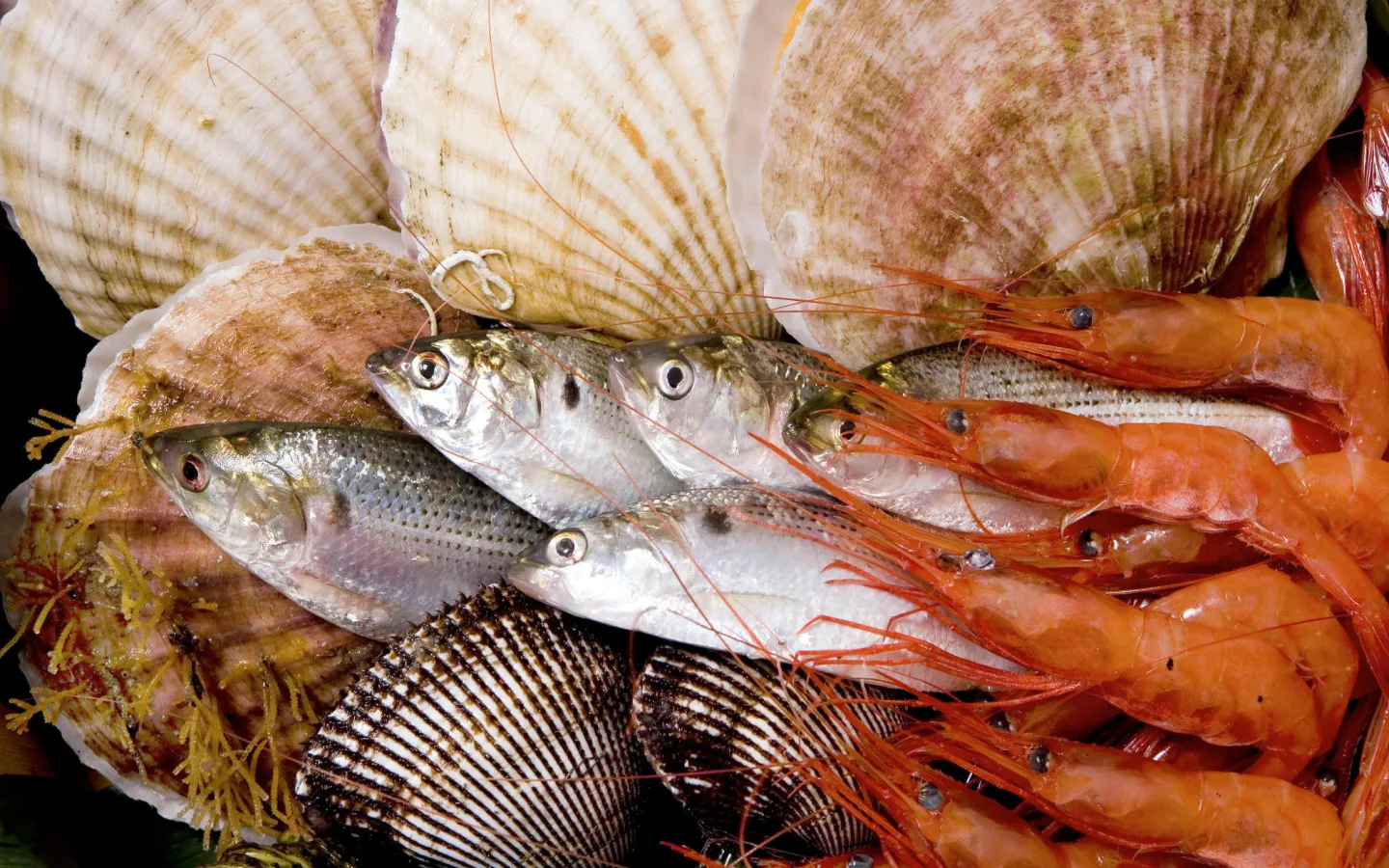
Fish and seafood
Lidl pursues an ambitious goal to enhance sustainability in its approach to responsible fish and seafood sourcing. To achieve this target, Lidl relies on greater transparency and traceability as well as the use of well-known labels and certifications.
Transparent and traceable fish and seafood
Lidl is committed to ensure the traceability and transparency of their entire fish and seafood range. By the end of 2025, all products shall be labelled accordingly and indicate, i.e., the country of production, the species, and the fishing or aquaculture method.
Lidl is also working towards demonstrating complete fish and seafood supply chain traceability. In the case of aquaculture, this includes the traceability of the species farmed and the feed used.
For wild catches, the aim is to ensure traceability by examining both the fishing vessel and the specific catch event.
The scope is the entire fish and seafood range in all Lidl countries worldwide: own brands and third-party brands, standard and promotional range.
Proportion of fish and seafood from acceptable and recommendable sources according to WWF in the total range
Lidl has set the target to ensure that 100% of the entire range of fish and seafood comes from sources that are classified as recommendable or acceptable according to WWF criteria. This commitment will be measured by tracking the percentage of the total fish and seafood volume that comes from these recommendable sources.
WWF classifies the following sources as recommendable or acceptable:
- WWF score 1-3
- Certifications MSC, ASC, Bio, BAP4 Star, Global G.A.P
- Fishery Improvement Projects (FIPs) and Aquaculture Improvement Projects (AIPs) supported by WWF
The scope is the entire fish and seafood range in all Lidl countries worldwide: own brands and third-party brands, standard and promotional range.
By the end of 2024 Lidl aimed to screen any new non-certified products for compliance before listing. Defined as new are all sources not included in the sources at the time of the baseline assessment. This objective could not yet be implemented in the reporting year.
Proportion of fish and seafood from recommended sources according to WWF in the total range
Lidl has set the target of increasing the proportion of WWF-recommended sources in its entire fish and seafood range. The percentage of the total volume of the fish and seafood range is measured. Recommended sources are defined as score 1-2 of the WWF Seafood Guide.
The scope is the entire fish and seafood range in all Lidl countries worldwide: own brands and third-party brands, standard and promotional range.
Lidl is currently working on the definition of the baseline and the improvement path.
Proportion of fish and seafood from WWF-recommended labels in the overall range
Lidl has set itself the target of increasing the proportion of WWF-recommended labels in its entire fish and seafood range. The percentage of the total volume of the fish and seafood range is measured. Recommended labels are the MSC, ASC, Bio, BAP4 Star and GlobalGAP certifications. The scope is the entire fish and seafood range in all Lidl countries worldwide: own brands and third-party brands, standard and promotional range.
Lidl is currently working on the definition of the baseline and the improvement path.
Sustainable diets
As part of the partnership, Lidl will promote sustainable and healthy nutrition.
Increase the share of plant-based products
Lidl is committed to pursuing a dietary strategy that increases the consumption of plant-based products and reduces the consumption of animal-based products. In 2024, Lidl reviewed and revised its sustainable diets strategy, measured the split of animal and plant-based protein containing products using the WWF methodology and set the target to increase the share of plant-based products by 20% compared to 2023 until 2030. Within this overall target, all Lidl countries* set national targets for: (a) an increase of the whole grain share in the entire grain assortment (b) always offering at least one whole grain alternative in all relevant product groups and (c) an increase of the proportion for plant-based protein sources in comparison to animal-based protein sources.
To achieve this overall target, Lidl will increasingly include sustainable and healthy plant-based protein products in its range and reduce sales of animal protein sources. The scope of application is the entire product range in all Lidl countries worldwide: own brands and third-party brands, standard and promotional range.
* except the US
Circular economy & reduction of food waste
To ensure long-term resource conservation, as part of the partnership Lidl is focusing on enhancing the recyclability of materials and minimizing food waste.
Food Waste in Lidl’s own operations
Lidl has set the target to further reduce food waste in its own stores and distribution centres. To achieve this, Lidl is developing a globally applicable strategy with clear targets. The focus lies on minimizing waste and optimizing the use of unsold food, including donating it where possible. Additionally, Lidl has committed itself to regularly report on food waste both nationally and internationally. The scope of application is the entire product range in all Lidl countries worldwide: own brands and third-party brands, standard and promotional range.
Food loss in the value chain
Food production often results in losses, for example through the creation of by-products. Some of these could be processed into other products and thus significantly reduce food waste. Lidl has committed to identifying food losses in its own production processes.
To achieve this, Lidl will define the baseline until 2026 and subsequently develop and implement a strategy that addresses food waste in order to avoid by-products or return them to the human diet. The scope of application is the production processes of own-brand products in Lidl countries worldwide.
Circularity of packaging and non-food products
Lidl has set the target of establishing circular approaches in the areas of packaging and non-food products. Lidl will develop and implement a circularity strategy by 2025 with the support of WWF. The scope of the strategy includes packaging for own-brand products and non-food own-brand products.
