Partnership with Coop 2025
Since 2006, WWF and Coop have worked together in a strategic partnership to promote more environmentally friendly consumption. Coop has committed to ambitious targets with WWF in the most important environmental areas.

Related Topics:
Corporate Partnership
CLIMATE
In January 2022, Coop committed under the Science Based Targets initiative (SBTi) to reducing its emissions based on science-based targets. This means Coop is reducing not only its operational footprint but also indirect emissions, such as emissions from traded products. Since 2007, Coop has also been working to avoid and reduce CO2 emissions from air-freighted goods, coop.ch deliveries and business travel along a binding reduction pathway. More information on voluntary climate protection projects can be found here.
Coop pursues a reduction path for the Scopes 1-2 in line with the SBTi
Coop has set itself the target of reducing absolute CO2e emissions in Scope 1 and Scope 2 market-based by 42% by 2030 compared with 2022. Emissions are calculated in accordance with the GHG Protocol and the targets were validated by SBTi. Progress is measured in tonnes of CO2eq per year. The scope covers the entire Coop Group.
In 2025, the Coop Group’s CO2e emissions Scope 1 and 2 market-based amounted to 242,141 tonnes CO2eq.
Coop pursues a reduction path for Scope 3 agreed with SBTi
Coop has set itself the target of reducing absolute CO2e emissions in Scope 3 by 30.3% for FLAG emissions (emissions from the agricultural and forestry supply chain), by 25% for non-FLAG emissions and by 42% for the sale of fuels by 2030 compared with 2022. Emissions are calculated in accordance with the GHG Protocol and the targets were validated by SBTi.
In order to track the development of emissions, the underlying data and calculation methods must be comparable over time. Coop has further developed the calculation of Scope 3 emissions in recent years. Both data collection and the calculation methodology have been improved, including the switch from IPCC AR5 to IPCC AR6. In addition, a new calculation tool has been used since 2025 to determine the Scope 3 footprint. Due to these methodological changes, comparability between the base year 2022 and the reporting year 2025 is currently not given. As a result, no robust statement on emissions development can currently be made.
For this reason, the figures for the base year 2022 will be recalculated during 2026 using a new model and higher-quality data rebaselining.
Reduction of absolute CO2e emissions from air-freighted goods
Coop has set itself the target of reducing absolute CO2e emissions from air-freighted goods from 84,605 tonnes CO2e in the base year 2014 to 55,871 tonnes CO2e by 2026. This is measured in tonnes of imported air-freighted goods multiplied by kilometres and CO2e per kilometre. The reporting period was July 2024 to June 2025. The scope covers air-freighted goods excluding flowers for supermarkets, Pronto, Jumbo and department stores.
By mid-2025, absolute CO2e emissions from air-freighted goods amounted to 66,833 tonnes CO2e.
Note: The increase compared with the previous year was mainly due to higher volumes of air-freighted meat products and exotic fruits. Reasons included disease-related restrictions in countries of origin closer to Switzerland, which meant that Coop had to partly switch to more distant sourcing regions. Quality requirements and ensuring product availability also played a role. Coop continues to work on reducing air transport wherever possible, for example by expanding sea freight, sourcing from regions closer to Switzerland and taking measures to extend product shelf life.

Water
Coop is currently developing the basis for setting science-based targets in the area of water.

BIODIVERSITY
Coop is currently developing the basis for setting science-based targets in the area of biodiversity.
Transparency by commodity
Coop has set itself the target that by 2026 the origin of 100% of Forest Risk Commodities beef, cocoa, coffee, palm oil food and non-food, and wood and paper will be known. This is measured as the share of Forest Risk Commodities in Coop own brands; for wood and paper, branded products are also included. The scope is retail.
In 2025, the origin was known for around 98% of Forest Risk Commodities.
Supplier engagement
Coop has set itself the target that by 2026 those suppliers that together account for 90% of the relevant purchasing volume will have a commitment to deforestation- and conversion-free supply chains.
This is measured as the volume-based share of direct business partners with such a commitment. Suppliers of Coop own brands in the areas of meat, cocoa, coffee, palm oil, as well as Coop own brands and branded products for wood and paper in retail are included.
In 2025, suppliers covering 78.6% of the relevant purchasing volume had a commitment to deforestation- and conversion-free supply chains.
Certification
Coop has set itself the target that by 2026 100% of Forest Risk Commodities beef, cocoa, coffee, palm oil, soy, wood and paper will comply with a minimum standard.
This is measured as the share of Forest Risk Commodities in Coop own brands. For wood and paper, branded products are also included. The scope is retail.
In 2025, the share of Forest Risk Commodities with a minimum standard was 90%.
Note: The share was further increased compared with the previous year. Full target achievement is currently particularly challenging in the area of soy, as the Soy Network Switzerland currently does not require a commitment to 100% certified soy, but instead has a target value of 95%. In addition, the ASC feed standard currently does not require fully certified soy.
The following minimum standards are accepted:
Beef:
Bio Suisse, origins without deforestation and conversion risk according to the WWF report
Cocoa:
Fairtrade Max Havelaar, Bio Suisse, Rainforest Alliance
Coffee:
Fairtrade Max Havelaar, Bio Suisse, Rainforest Alliance
Palm oil food:
RSPO Identity Preserved IP, RSPO Segregated SG, Bio Suisse
Palm oil non-food:
RSPO Identity Preserved IP, RSPO Segregated SG, RSPO Mass Balance MB, Bio Suisse
Soy:
Standards prohibiting soy feed, Bio Suisse, Pro Terra, Donau Soja, Europe Soya, RTRS Non-GM, origin Switzerland, other origins without deforestation and conversion risk according to the WWF report, Mutterkuh, Naturabeef, Naturaveal, IP-Suisse Weidebeef
Wood and paper:
FSC or recycled or with verified origin, PEFC or origin without deforestation and conversion risk according to the Preferred by Nature risk country list.
Traceability per raw material
Coop has set itself the target of increasing the share with a segregated minimum standard for the commodities cocoa, coffee and palm oil to 85% by 2026. The scope is retail.
In 2025, around 86% of the procured cocoa, coffee and palm oil had a segregated minimum standard.
Note: The positive development was driven in particular by improvements in cocoa and the already high share of segregated supply chains for coffee. Additional momentum came from the requirements of the EU Deforestation Regulation EUDR.
FISH AND SEAFOOD
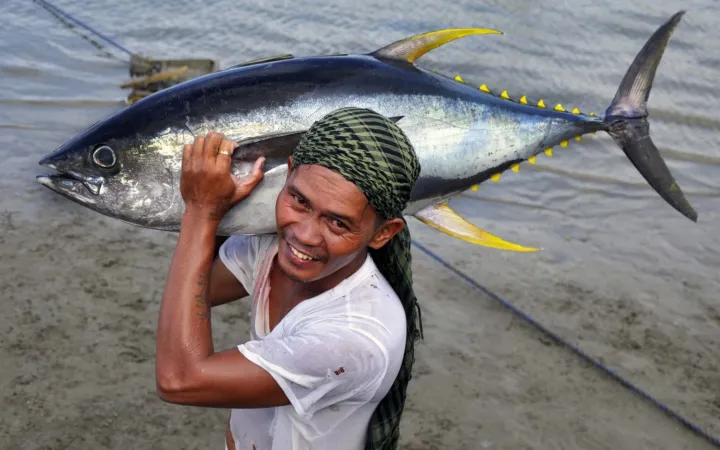
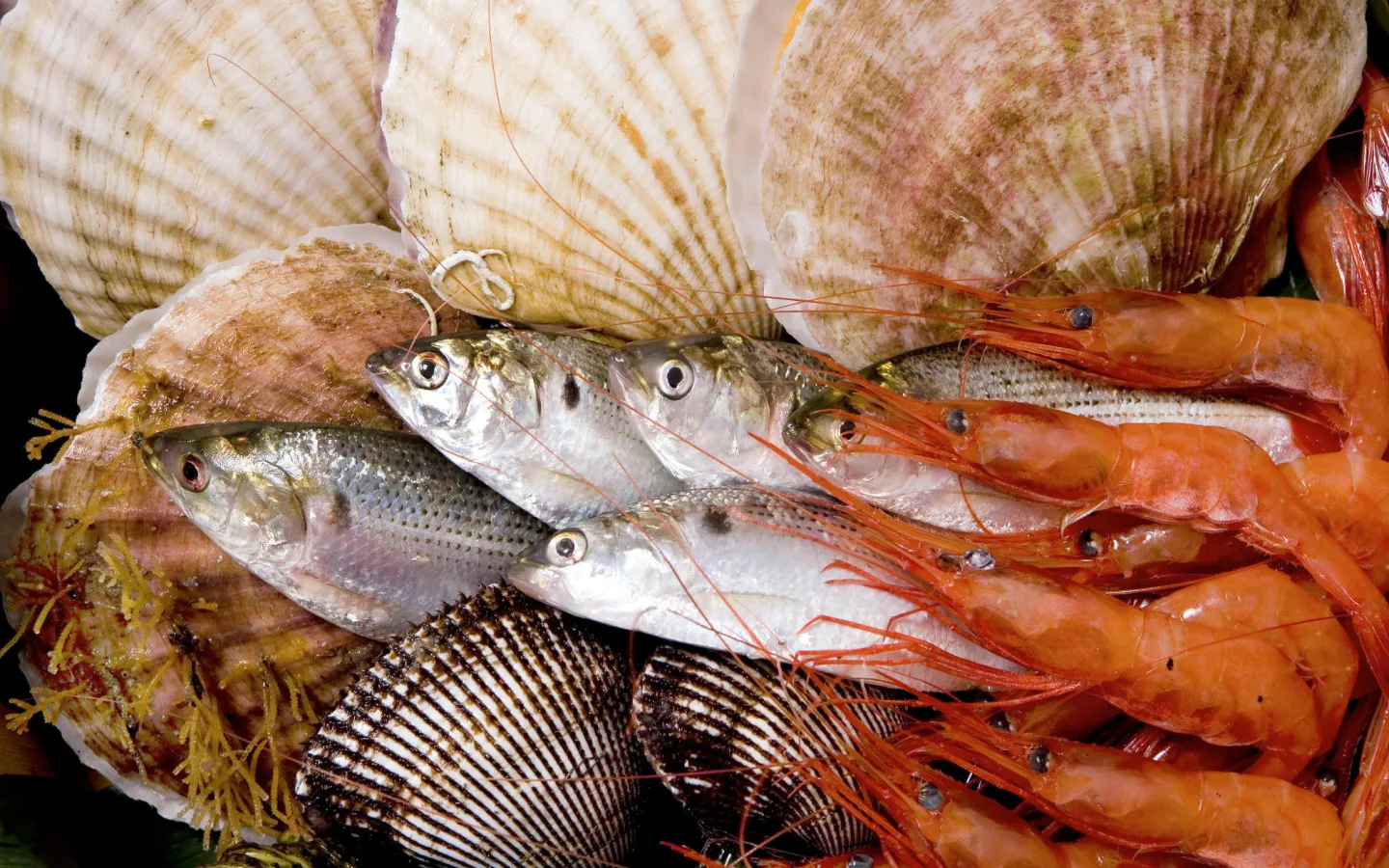
As members of the WWF Seafood Group, Coop and Bell have committed not to offer endangered species, to gradually delist non-recommended origins and to continuously increase the share of recommended labels.
Coop: share of recommended or acceptable sources according to WWF in the total seafood assortment
Coop has set itself the target that 100% of the total seafood assortment will come from sources that are recommended or acceptable according to WWF. This is measured as the percentage share by volume in kg of the total seafood assortment. The scope includes Coop supermarkets, Pronto, Coop to go, Coop.ch, department stores, restaurants and FOOBY.
In 2025, 100% of the total seafood assortment again came from recommended or acceptable sources.
Note: Since this year, the target and measurement of target achievement have been based on volume in kg instead of revenue in CHF.
Coop: share of recommended sources according to WWF in the total seafood assortment
Coop has set itself the target that by 2026 86.4% of the total seafood assortment will come from sources recommended by WWF. This is measured as the percentage share by volume in kg of the total seafood assortment. The scope includes Coop HC14/18/31 excluding Coop Restaurant and Marché.
In 2025, 82.5% of the total seafood assortment came from recommended sources.
Note: The share of recommended sources increased slightly compared with the previous year but remains below the target pathway. This was mainly due to the delayed switch of farmed cod to ASC and the only slowly recovering demand for organic salmon.
Since this year, the target and measurement of target achievement have been based on volume in kg instead of revenue in CHF.
Bell: The share of recommendable or acceptable sources according to WWF in the entire seafood range
Bell has set itself the target that by 2026 99.0% of the total seafood assortment will come from recommended or acceptable sources according to WWF. This is measured as the percentage share by volume in kg of the total seafood assortment. The scope is Bell Seafood.
In 2025, 99.1% of the total seafood assortment came from recommended or acceptable sources. Bell therefore exceeded the target, mainly due to score improvements in the freshwater fish segment.
Note: Since this year, the target and measurement of target achievement have been based on volume in kg instead of revenue in CHF.
Bell: share of recommended sources according to WWF in the total assortment
Bell has set itself the goal that by 2026, 75.0% of the total seafood assortment will originate from recommendable sources according to WWF. This is measured as the percentage share by volume in kg of the total seafood assortment. The scope is Bell Seafood.
In 2025, 73.2% of the total seafood assortment came from recommended sources. Bell is therefore on track, mainly due to further assortment changes in the salmon segment to ASC-certified products.
Note: Since this year, the target and measurement of target achievement have been based on volume in kg instead of revenue in CHF.
Two Spice: share of recommended or acceptable sources according to WWF in the total seafood assortment
Two Spice has set itself the target that by 2026 100% of the seafood assortment will come from recommended or acceptable sources according to WWF. This is measured as the percentage share of the total volume in kg of the seafood assortment. The scope is Two Spice AG formats: Yooji’s, Rice Up!, Nooba, Yalda, Cheyenne, Boilerroom and Zenbu.
In 2025, 99.99% of the seafood assortment came from recommended or acceptable sources. Two Spice is therefore on track.
Two Spice: share of recommended sources according to WWF in the total seafood assortment
Two Spice has set itself the target that by 2026 87% of the seafood assortment will come from recommended sources according to WWF. This is measured as the percentage share of the total volume in kg of the seafood assortment. The scope is Two Spice AG formats: Yooji’s, Rice Up!, Nooba, Yalda, Cheyenne, Boilerroom and Zenbu.
In 2025, 82% of the seafood assortment came from recommended sources according to WWF. Two Spice is therefore on track.
ASSORTMENT
Coop has set the goal of increasing sales of organic products and expanding the range of vegan and vegetarian alternative products.
Increase the number of vegan and vegetarian alternative products
Coop has set itself the target of expanding its range of vegan and vegetarian alternative products to 2,000 items by 2026.
This is measured as the number of new items added each year. This includes meat, fish, egg and dairy substitute products as well as products from lines that are deliberately designed and marketed for vegan or vegetarian consumption, for example Karma.
In 2025, 2,100 vegan and vegetarian alternative products were listed. Coop therefore exceeded the defined target pathway.
Turnover with organic labels
Coop has set itself the target of increasing revenue from organic products to CHF 2,100 million by 2026. This is measured as revenue in CHF million. Accepted standards are Demeter, Bio Suisse, Swiss organic and EU organic. The scope is Coop retail, own brands and third-party brands.
In 2025, revenue from organic products amounted to CHF 1,944.00 million.